

Ordering plants from an international supplier can give commercial growers access to a wider selection of varieties and established propagation systems. However, international purchasing involves more planning than a domestic order. Buyers need to consider plant specifications, documentation, shipping conditions, import regulations, and delivery schedules before confirming a shipment.
When sourcing Tissue Culture Plants Wholesale internationally, it is important to understand the complete ordering process. Young Plants is one supplier buyers may evaluate, but regardless of supplier, having clear requirements and documentation in place can help reduce avoidable complications.
Confirm Plant Specifications Before Ordering
The first step is to establish exactly what plants are required. Different suppliers may offer the same species in different cultivars, sizes, developmental stages, or quantities.
Before requesting a quotation, prepare a detailed list that includes:
- Plant species and cultivar
- Required quantity
- Plant development stage
- Preferred delivery schedule
- Packaging expectations
- Destination country
- Any specific quality requirements
Clear specifications make it easier to compare quotations and reduce the risk of receiving plants that do not match the intended production system.
Check Import Regulations
International plant shipments are subject to regulations in the destination country. These rules can vary depending on the plant species, country of origin, and intended use.
Some destinations may require import permits, phytosanitary certificates, inspections, or other documentation. Buyers should investigate applicable requirements before placing an order because obtaining certain approvals may take time.
Understand Phytosanitary Documentation
A phytosanitary certificate may be required for international movement of plant material. It provides information related to the plant shipment and confirms compliance with applicable plant-health requirements.
The exact documentation depends on the destination and type of plant material. Buyers should confirm with the relevant agricultural or plant-protection authority which documents are required for their shipment.
Ask About Plant Condition at Shipment
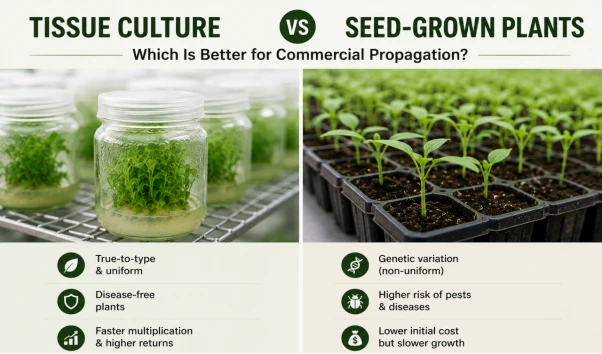
Tissue culture plants can be supplied at different stages of development. Their condition at shipment affects how they should be handled after arrival.
Buyers should ask whether plants are supplied in vessels, trays, or another format and whether they require immediate transfer into an acclimatization environment.
Understanding the condition of the plants before purchase allows growers to prepare the appropriate facilities and personnel.
Consider Shipping Time
International transportation can take longer than domestic delivery. Transit times may also be affected by customs processing, inspections, flight schedules, weekends, holidays, or other logistical factors.
For this reason, growers should avoid planning shipments around extremely tight production deadlines. Allowing additional time can provide more flexibility if unexpected delays occur.
Plan for Acclimatization
Tissue culture plants often require careful acclimatization after leaving their controlled production environment. The receiving facility should be prepared before the shipment arrives.
Growers may need suitable humidity control, temperature management, lighting, growing media, trays, and clean working areas.
Having these resources ready can make the transition from shipment to greenhouse or nursery production more organized.
Review Packaging Methods
Packaging plays an important role in protecting plants during international transportation. Buyers should ask suppliers how the plants will be secured and protected throughout the journey.
The appropriate packaging method can depend on the plant type, quantity, shipping duration, and transportation route. Buyers should also confirm whether packaging costs are included in the quotation.
Understand Customs Procedures
International shipments may need to pass through customs before reaching the final destination. Depending on the country, customs authorities may request commercial invoices, packing lists, certificates, permits, or other documentation.
Incomplete or inconsistent paperwork can create delays. Buyers should make sure the information on the order, shipping documents, and import documentation is accurate and consistent.
Consider Shipping Costs
The purchase price of the plants is only one part of the total cost of an international order. Transportation, documentation, customs processing, inspections, and other charges may also apply.
When comparing suppliers, buyers should calculate the expected landed cost rather than comparing the plant price alone.
Confirm Minimum Order Quantities
International suppliers may establish minimum order quantities to make production and shipping more efficient. These requirements can vary according to the plant variety and supplier.
Growers should confirm minimum quantities before finalizing their purchasing plans. If several varieties are required, it can also be useful to ask whether different varieties can be combined within a shipment.
Review Lead Times
Production lead time is particularly important when ordering internationally. Some varieties may require more time to prepare than others, especially when plants must be produced specifically for a large order.
Ask the supplier about the expected production schedule, preparation period, and estimated shipping date. This information can then be compared with the grower’s cultivation calendar.
Prepare the Receiving Facility
The receiving facility should be ready before the shipment arrives. Staff should know how to inspect the plants, unpack them, and move them into the appropriate growing environment.
A basic receiving plan should cover:
- Shipment inspection
- Plant counting
- Documentation checks
- Damage or quality assessment
- Initial acclimatization
- Record keeping
- Transfer to the production area
A structured process can help identify issues quickly and maintain accurate inventory records.
Ask About Replacement Policies
Before ordering, buyers should understand how the supplier handles problems involving damaged, missing, or unsuitable plants.
Ask about the procedure for reporting shipment issues, the time limit for making a claim, and what evidence may be required. Taking photographs and maintaining shipment records can be useful if a problem needs to be documented.
Consider Currency and Payment Terms
International transactions may involve currency conversion and different payment arrangements. Exchange-rate changes can affect the final cost when an order is priced in a currency different from the buyer’s local currency.
Buyers should confirm the payment schedule, accepted payment methods, currency, and any applicable transaction charges before confirming the order.
Build a Realistic Delivery Schedule
International plant orders should be integrated into the overall cultivation plan. The expected arrival date should allow sufficient time for customs clearance, receiving, acclimatization, and establishment.
Instead of scheduling critical production activities immediately after the estimated arrival date, growers can benefit from building some flexibility into the schedule.
Maintain Communication With the Supplier
Communication becomes especially important when purchasing across borders. Buyers should keep written records of plant specifications, quantities, shipment dates, documentation, and agreed terms.
Regular communication before dispatch can also help confirm that the supplier has the correct delivery information and that all required documents are prepared.
Compare the Complete Order, Not Just the Price
International purchasing decisions should consider more than the quoted unit price. A complete comparison can include plant specifications, quality requirements, packaging, shipping, documentation, lead time, and after-delivery support.
A supplier with a slightly different quotation may have a different cost structure because of shipping arrangements or included services. Comparing orders on the same basis provides a more useful picture of the total purchase.
Conclusion
Ordering tissue culture plants internationally requires careful preparation. Buyers need to understand plant specifications, import regulations, documentation, packaging, shipping arrangements, customs procedures, and acclimatization requirements before placing an order.
With clear specifications, realistic timelines, and organized communication, commercial growers can prepare more effectively for international plant shipments. Reviewing the complete purchasing process in advance also helps ensure that the plants, paperwork, facilities, and logistics are aligned before the order is dispatched.