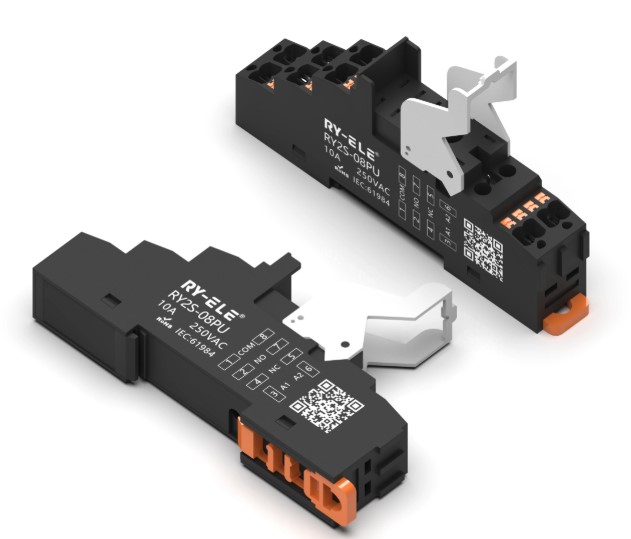

Industrial control boards rely on dependable components to manage switching, signal routing, and electrical loads. A relay socket plays an important role because it connects a relay to the circuit board while supporting secure installation and easier maintenance. Choosing the right socket requires more than checking its physical dimensions.
When selecting a PCB relay socket, engineers should consider relay compatibility, electrical ratings, board layout, mounting requirements, and operating conditions. A properly matched socket helps create a stable connection and makes relay replacement more convenient during maintenance.
Understand Relay Compatibility
The first step involves confirming that the socket matches the relay you plan to install. Relays differ in pin configuration, terminal arrangement, dimensions, and electrical specifications. A socket designed for one relay series may not work with another, even when the components look similar.
Check the relay datasheet for its pin count and terminal layout. The socket should provide the correct contact arrangement without requiring modifications to the PCB.
Check Pin Configuration
Pin alignment directly affects installation accuracy. Compare the relay’s terminal pattern with the socket footprint before placing an order.
Important details include:
- Number of relay pins
- Pin spacing
- Terminal arrangement
- PCB hole dimensions
- Relay body dimensions
A precise match reduces installation problems and helps prevent incorrect connections.
Consider Electrical Ratings
Electrical performance matters just as much as mechanical compatibility. The socket contacts need to handle the voltage and current requirements of the relay and connected control circuit.
Review the socket’s rated voltage, current capacity, insulation characteristics, and dielectric strength. Choose specifications that provide an appropriate operating margin rather than selecting a component based only on the minimum requirements.
Industrial equipment may experience electrical fluctuations, so adequate ratings can contribute to long-term reliability.
Evaluate PCB Mounting Requirements
The socket must fit the physical design of the control board. Before selecting a model, review the available PCB space and compare it with the socket’s dimensions.
Pay attention to:
- PCB footprint
- Mounting hole arrangement
- Socket height
- Terminal spacing
- Clearance around nearby components
A compact design can help when control boards contain many relays and other components. At the same time, engineers need enough clearance for inspection, installation, and heat dissipation.
Check Material and Construction Quality
Socket construction influences durability and electrical performance. Industrial control boards may operate continuously, so the socket should withstand repeated relay insertion and removal without losing contact reliability.
Look for suitable housing materials, dependable terminals, and secure mechanical construction. Contact materials and plating also deserve attention because they affect conductivity and resistance to corrosion.
RY-ELE focuses on relay and relay socket solutions designed for different control applications, giving engineers options when developing industrial switching systems.
Consider Operating Conditions
The surrounding environment can influence component selection. A control board installed inside a clean cabinet may have different requirements from equipment exposed to vibration, temperature changes, dust, or humidity.
Consider the expected:
- Operating temperature
- Vibration levels
- Humidity
- Electrical noise
- Installation environment
- Maintenance frequency
Choosing a socket according to actual operating conditions helps reduce the risk of premature contact or mechanical problems.
Think About Maintenance and Replacement
One advantage of using a socket comes from easier relay replacement. Instead of removing the entire relay from the PCB through soldering work, technicians can replace a compatible relay through the socket.
This approach can reduce maintenance time and minimize the risk of damaging PCB traces during repeated servicing. For equipment that requires regular inspection or quick component replacement, socket accessibility can become an important design consideration.
Review Thermal Performance
Heat can affect electrical components over extended operating periods. Although a relay socket does not generate the same amount of heat as some power components, its surrounding environment still matters.
Check the relay’s heat generation and the control board’s ventilation arrangement. Avoid placing heat-sensitive components too close to high-temperature devices, and ensure the selected socket suits the expected operating temperature range.
Compare Manufacturer Support and Quality Control
Component consistency matters when control boards move from prototypes to larger production runs. Engineers should evaluate the manufacturer’s specifications, production capabilities, quality control practices, and ability to maintain consistent component dimensions.
A reliable supplier should provide clear technical information and help customers verify compatibility before production.
RY-ELE offers relay-related components for industrial control applications, making technical specifications and product compatibility important factors to review when selecting a socket.
Avoid Common Selection Mistakes
Several simple mistakes can create unnecessary problems during PCB development. Selecting a socket solely because its dimensions appear suitable may result in electrical or mechanical incompatibility.
Common issues include:
- Ignoring the relay’s pin arrangement
- Choosing insufficient electrical ratings
- Overlooking PCB clearance
- Failing to consider environmental conditions
- Selecting a socket without checking the relay datasheet
- Neglecting future maintenance requirements
A complete specification review before procurement can prevent many of these issues.
Final Considerations for Industrial Control Boards
Choosing the right socket requires a balanced evaluation of electrical, mechanical, thermal, and environmental requirements. Engineers should confirm relay compatibility first, then examine ratings, PCB footprint, construction quality, operating conditions, and maintenance needs.
A well-matched socket supports reliable relay installation while making future servicing easier. By reviewing technical specifications carefully and working with an experienced supplier such as RY-ELE, control board designers can select relay socket components that fit their application and production requirements.