
Industrial processes often handle mixtures that contain suspended solids and liquids. Separating these components efficiently helps manufacturers improve product quality, recover valuable materials, and maintain stable production. Centrifugal separation offers a practical approach for applications that require continuous and reliable solid-liquid processing.
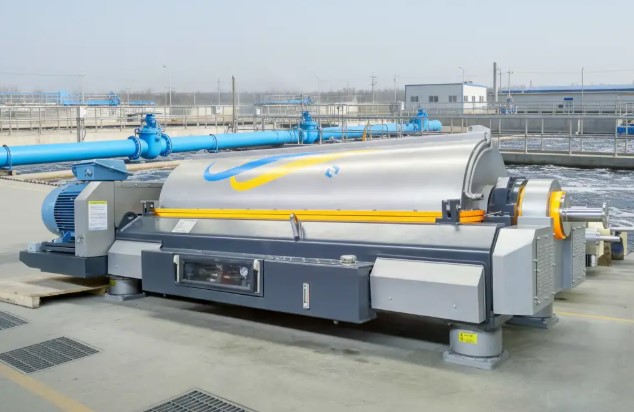
A centrifuge separator uses high-speed rotation to create centrifugal force that separates materials according to their density. Heavier solid particles move outward toward the rotating bowl, while lighter liquid remains closer to the center. This basic principle supports efficient separation across many industrial applications.
What Is Industrial Solid-Liquid Separation?
Solid-liquid separation removes suspended or settled solid particles from a liquid stream. Industries may need this process to clarify liquids, recover solids, concentrate slurries, or prepare materials for additional processing.
Traditional methods include filtration, sedimentation, and settling tanks. These methods can work well under certain conditions, but they may require significant space or longer processing times.
Centrifugal equipment provides a compact alternative. Its rotating mechanism generates much stronger separation forces than gravity alone, making it suitable for mixtures containing fine particles that settle slowly.
How Does a Centrifuge Separator Work?
The operating principle relies on centrifugal force. When a mixture enters a rapidly rotating bowl, the rotation pushes denser components toward the outer wall.
The lighter liquid forms a layer closer to the rotational axis. As the machine continues operating, separate outlets or collection systems remove the processed phases.
Step 1: Feed Introduction
The industrial mixture enters the centrifuge through a controlled feed system. Proper feed distribution helps the equipment maintain stable operating conditions.
Feed characteristics such as solids concentration, particle size, viscosity, and flow rate influence separation performance.
Step 2: High-Speed Rotation
Inside the rotating bowl, centrifugal force acts on the mixture. Dense solid particles migrate outward because they experience greater centrifugal effects than the surrounding liquid.
Higher rotational speeds generally produce stronger centrifugal forces. However, equipment operators must select suitable operating conditions based on the material and machine design.
Step 3: Solid Migration
As particles move toward the bowl wall, they form a concentrated solids layer. The equipment design determines how these accumulated solids remain inside the separation zone or move toward the discharge area.
Continuous systems can remove concentrated solids without stopping the entire process, supporting consistent industrial production.
Step 4: Liquid Clarification
After heavier particles migrate outward, the clarified liquid remains closer to the center of the rotating bowl. The separated liquid then moves toward its designated outlet.
The final liquid quality depends on several factors, including particle characteristics, residence time, feed conditions, and centrifugal force.
Key Components of Industrial Centrifugal Equipment
Although centrifuge designs vary according to application, several components commonly support the separation process.
Rotating Bowl
The bowl provides the primary separation chamber. Its rotational speed determines the centrifugal force applied to the mixture.
Feed System
The feed system introduces the process material into the machine. Controlled feeding helps maintain consistent separation conditions.
Solids Discharge Mechanism
Industrial equipment may use different mechanisms to remove concentrated solids. Continuous discharge systems help maintain stable operation during extended production cycles.
Liquid Outlet
The liquid outlet directs the clarified phase away from the separation chamber. Proper outlet design helps maintain the desired liquid-solid interface.
Drive System
A motor and associated drive components rotate the bowl at the required speed. Reliable drive performance supports consistent processing and operational stability.
What Factors Affect Separation Performance?
A centrifuge does not operate independently of the material entering the machine. Feed properties and operating conditions have a direct effect on the final separation result.
Important factors include:
- Particle size and density
- Solids concentration
- Liquid viscosity
- Feed flow rate
- Bowl speed
- Residence time
- Temperature
- Required solids dryness
- Desired liquid clarity
Fine particles often require carefully controlled operating conditions because they may remain suspended longer than larger particles.
Why Use Centrifugal Separation in Industrial Applications?
Centrifugal separation offers several practical benefits for industrial processing. Its compact design allows manufacturers to process substantial volumes without relying on large settling areas.
Continuous operation also reduces the need for frequent interruptions. This advantage can support production environments where consistent throughput matters.
The equipment can also handle mixtures that present challenges for gravity-based separation. Strong centrifugal forces accelerate particle migration and help improve separation efficiency.
Common Industrial Applications
Centrifugal solid-liquid separation appears across numerous processing industries. The exact machine configuration depends on the material and required separation results.
Typical applications include:
Chemical Processing
Chemical plants may use centrifugal separation to remove suspended solids, recover process materials, or clarify liquid streams.
Food Processing
Food manufacturers can use centrifugal equipment to separate solids from liquid products and processing streams while maintaining controlled production conditions.
Wastewater Treatment
Treatment facilities may use centrifuges to concentrate sludge and reduce its liquid content before additional handling or disposal processes.
Mineral Processing
Mining and mineral operations often process slurries containing substantial quantities of solid particles. Centrifugal equipment can help separate solids from liquid components.
Pharmaceutical Manufacturing
Pharmaceutical processes may require controlled separation of solids and liquids during different production stages. Equipment selection depends heavily on process requirements and material characteristics.
Centrifuge Separation vs. Traditional Methods
Sedimentation depends primarily on gravity, so fine particles may require considerable time to settle. Large settling tanks can also consume valuable facility space.
Filtration relies on a filter medium to retain solid particles. While effective for many applications, filters require maintenance and periodic replacement or cleaning.
Centrifugal separation uses mechanical force instead of relying solely on gravity. This approach can provide faster processing and continuous operation for suitable industrial mixtures.
How Shenzhou Machinery Supports Industrial Separation
Shenzhou Machinery focuses on separation equipment designed for industrial processing requirements. Proper equipment selection starts with understanding the feed material, desired throughput, separation target, and operating environment.
Manufacturers should evaluate these factors before selecting a centrifuge. Matching machine specifications with process conditions helps support stable operation and consistent separation results.
Maintenance Considerations
Regular maintenance helps preserve separation performance and equipment reliability. Operators should follow the manufacturer’s recommended inspection and servicing procedures.
Key maintenance tasks may include checking rotating components, inspecting wear-prone parts, monitoring vibration, and maintaining appropriate lubrication.
Operators should also monitor changes in feed conditions. Sudden increases in solids concentration or viscosity can affect machine performance and may require adjustments to operating parameters.
How to Choose the Right Equipment
Selecting industrial centrifugal equipment requires more than comparing processing capacity. The machine should match the physical and chemical characteristics of the material being processed.
Consider the following factors:
- Feed composition and solids concentration
- Required processing capacity
- Particle size distribution
- Desired liquid clarity
- Required solids concentration or dryness
- Operating temperature
- Available installation space
- Maintenance requirements
A detailed assessment of the application helps manufacturers identify an appropriate configuration and operating range.
Conclusion
A centrifuge separator uses controlled rotation and centrifugal force to separate solid particles from liquid streams. Dense solids migrate toward the outer bowl wall, while lighter liquid moves toward the central region and exits through a separate outlet.
This technology provides an efficient option for continuous industrial solid-liquid separation. Performance depends on equipment design, feed properties, operating parameters, and regular maintenance. With suitable equipment selection and process control, centrifugal separation can support reliable processing across chemical, food, wastewater, mineral, and other industrial applications.
Shenzhou Machinery provides separation equipment solutions for industrial processing needs, helping businesses evaluate centrifugal technology according to their specific production requirements.