
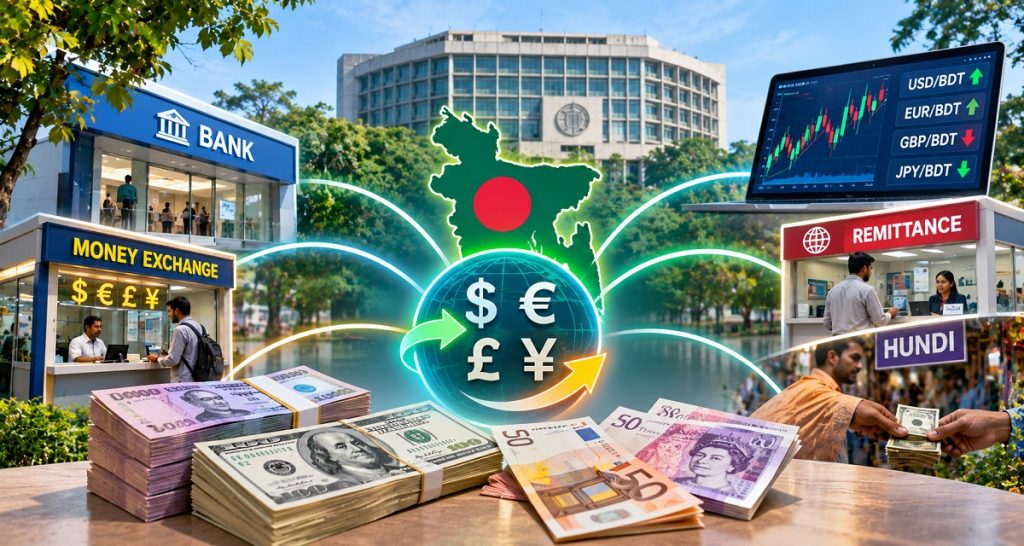

Dollars coming into Bangladesh through garment exports can help cover dollars going out to pay for fuel, machinery or fabric. The businesses behind those payments may deal with different banks and never transact with one another. An exporter can sell part of its dollar receipts for taka to cover local expenses, while an importer can buy dollars to pay an overseas supplier. If one bank has more dollars than it expects to need and another is short, the banks can trade with each other. The currency market takes shape through those transactions across a network of dealers.
A search for what is forex trading often leads to charts of heavily traded currency pairs such as the euro against the US dollar. In Bangladesh, the same basic exchange of one currency for another is part of paying import bills and converting export proceeds. Banks authorised to deal in foreign exchange handle these flows for their customers. They also trade with one another in the interbank market, the wholesale part of the system. The rate a business receives comes from its own transaction with a bank, which may then use the wholesale market to manage its currency position.
Timing helps explain why banks need that wholesale market. Dollars from an export shipment may come in after a bank has already committed to paying for an import. Remittance flows can also bring in foreign currency at a different pace from the payments falling due. Banks can have very different balances on the same afternoon, depending on the customers they serve and the bills they need to settle. Interbank trading lets banks with spare dollars supply those with payments approaching.
Bangladesh Bank publishes a daily benchmark exchange rate based on reported transactions. That figure gives businesses a common reference for following the taka. The rate on an actual bank quote can depend on when the deal takes place, its size and whether the customer is buying or selling dollars. A bank can quote a lower rate when it buys dollars from an exporter and a higher rate when it sells them to an importer. This difference, known as the spread, helps explain why 2 customers converting the same dollar amount in opposite directions can see different taka figures.
For a business looking up what is forex trading while preparing to pay a supplier, the distinction between a reference rate and a bank’s quote has a practical consequence. In a hypothetical example, a benchmark of 120 taka per US dollar would put a 50,000 US dollar invoice at 6 million taka. At a bank’s selling rate of 121, the importer would need 6.05 million taka for the currency alone, with any transfer charges to account for separately. The benchmark is useful for budgeting, and the bank’s quote shows how much taka the conversion would require at the quoted rate.
Bangladesh Bank can also buy or sell foreign currency as part of its exchange rate operations. Its transactions can affect the dollars available to banks, while each bank still has its own customer payments to manage. A garment exporter converting receipts and a household receiving money from abroad may encounter the market through different channels. Their transactions help explain how demand for taka and foreign currency can shift over the course of a day, even when

